Strong Back, Happy Horse
Strong Back, Happy Horse: What Every Horse Owner Needs to Know 🐴
Most horse owners care deeply about their horses and want to do the best for them.
But there’s something many riders simply haven’t been taught — and it has a huge impact on their horse’s comfort, longevity, and performance.
A horse’s back is not automatically strong enough for riding.
And riding alone does not necessarily build the strength needed to carry a rider properly.
In fact, if the body isn’t prepared first, riding can sometimes reinforce weakness and tension rather than strengthening the horse.
And this is why conversations around things like kissing spine have become so much more common in the horse world.
Once you start to understand how the horse’s body works, you realise something important:
conditioning matters far more than most riders realise.
The Responsibility We Have as Riders
When we sit on a horse, we’re asking their body to do something quite extraordinary.
Carry weight.
Stay balanced.
Move athletically.
And yet many horses are expected to do this without first being conditioned for the job.
Imagine asking a person to carry a heavy backpack while running — without ever building their core strength first.
They might manage it for a while.
But eventually the body starts to struggle.
Horses are exactly the same.
Developing the strength to support a rider properly doesn’t happen automatically — it has to be built over time.
And when we take the time to do that, horses move more comfortably, stay sounder, and enjoy their work much more.
Why Back Strength Matters So Much
The horse’s back can support a rider well — but only when the right muscles are doing their job.
The deep muscles around the spine and abdomen act like a support system, helping the horse stabilise their back and move with balance.
When those muscles aren’t strong enough yet, horses often compensate by:
• hollowing through the back
• dropping through the midsection
• becoming heavy on the forehand
• tightening through the spine
Over time, these patterns can place much more strain on the back than the horse was designed to handle.
This is one reason why back problems — including conditions like kissing spine — are discussed so often today.
Not because every horse will develop a serious issue, but because the way we condition them really matters.
Signs Your Horse May Be Struggling With Their Back
Back discomfort in horses is often subtle.
Instead of obvious lameness, it can show up as behavioural or performance changes such as:
• difficulty maintaining canter
• reluctance to bend or work evenly
• resistance in transitions
• hollowing or tension through the back
• struggling to build or maintain topline
These signs don’t automatically mean something serious is wrong.
But they can indicate that the horse needs more physical support and preparation.
And the tricky part is — many horses continue working like this quietly for years.
The Foundation: Core Strength
A strong back starts with a strong core.
The deep muscles that support the spine are responsible for:
✔ lifting the back
✔ stabilising the vertebrae
✔ supporting the rider’s weight
✔ allowing the topline to develop properly
Without this foundation, it becomes much harder for the horse to move comfortably and develop the strength we want to see.
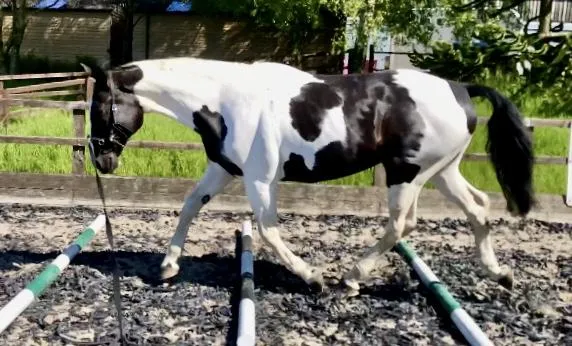
The good news is that these muscles can be strengthened very effectively with the right exercises and training approach.
What I Learned Through Rehabilitation
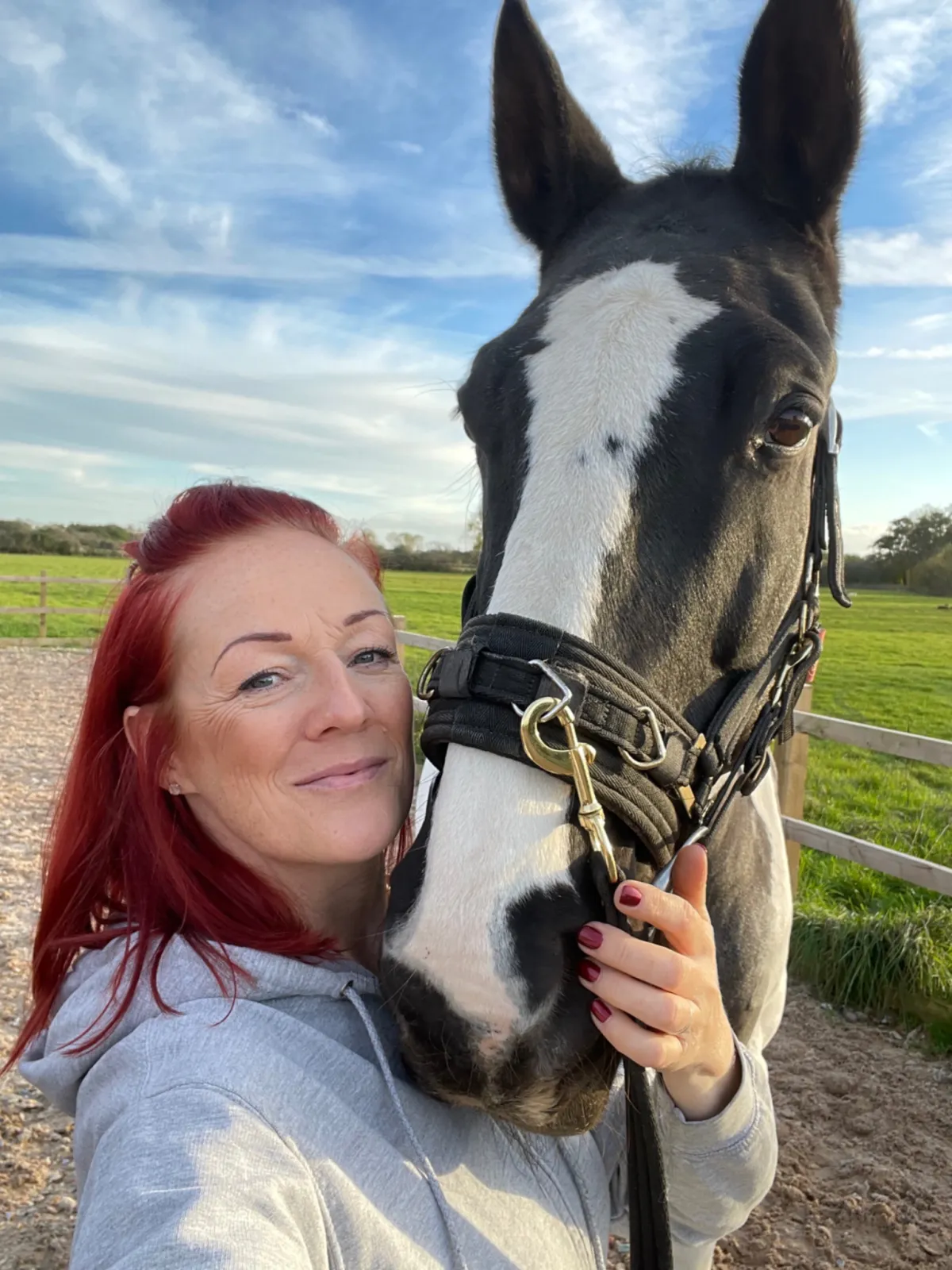
Through my work in equine rehabilitation — and especially through my own horse Azuro’s kissing spine journey — I learned just how powerful correct conditioning can be.
When horses develop the strength to lift their back, engage their core, and move with better posture, the difference can be remarkable.
They move more freely.
Transitions become smoother.
The back softens.
And the topline begins to develop much more naturally.
Many horses who once struggled begin to look and feel far happier in their work.
What Every Horse Owner Should Take Away
If there’s one message I’d love every horse owner to understand, it’s this:
🐴 Horses don’t automatically become strong enough for riding.
Just like human athletes, they need conditioning to support the demands placed on their body.
When we take the time to build their strength correctly, we give them the best chance of:
• staying comfortable
• developing a strong topline
• moving more freely and evenly
• enjoying their work
And ultimately, that’s what every horse deserves.
Helping Your Horse Build a Stronger Back
If you’d like to start developing your horse’s strength and posture safely, I’ve created resources that walk you through the exercises step by step:
⭐ Core Exercises for Your Horse – foundational exercises that strengthen the muscles supporting the spine...Click Here
⭐ In-Hand Exercises Course – practical groundwork to improve posture, flexibility, and balance...Click Here
⭐ Strength & Straightness Programme – a structured system for developing strength, posture, and correct movement over time...Click Here
Because when we build horses correctly from the inside out, we create something every rider wants:
A strong back — and a happy horse.