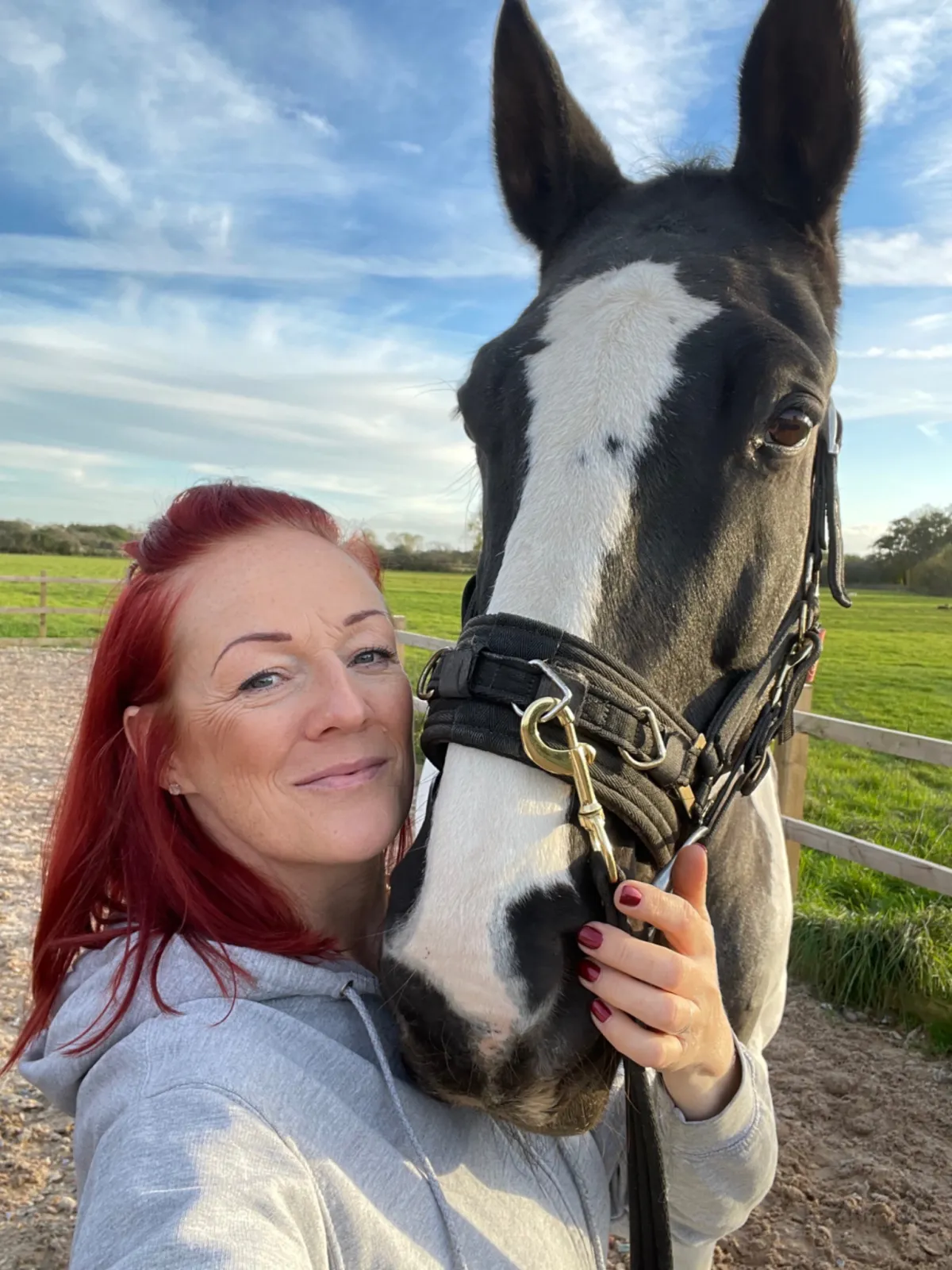
What to Do in the Stable When You Can’t Ride
Rain sideways. School like a pond. Dark by four.
And you’re standing in the stable feeling guilty because you haven’t ridden. 🦄
I hear this all the time. And honestly? I get it. After a long day, in the dark and the cold, it can feel like you’re letting your horse down.
You’re not.
Here’s what I say to every owner in that spot:
Not riding doesn’t mean you’re not helping your horse.
In fact, some of the most useful work you can do happens right there in the stable.
So it doesn’t have to be all or nothing this winter.
The simple rhythm
Last week I talked about how quickly core strength can slip over winter.
The good news is that the fix doesn’t need an arena, or a lot of time. It needs a rhythm:
Core exercises, most days.
Massage, once a week.
Some walking, whenever you can. A hand walk up the yard. A few minutes of walking over poles. Or a 15-minute walk around the yard on a lead rope. Even that counts.
That’s it.
Some weeks you’ll manage all three. Some weeks it’ll be one. One is still more than nothing, and your horse will feel the difference.
Why massage first?
Tight muscles don’t switch on well. Soft muscles do.
So the massage loosens the muscles, and the core exercises then wake up the deep postural muscles underneath.
That’s mobilise, then activate, in my own framework. It’s why they work so well as a pair.
Core, most days (5-10 minutes)
Little and often beats one big session.
A few stable-based core exercises, a few minutes at a time, on a daily basis, keep those deep muscles ticking over until the ground dries up.
On a rushed evening, a few minutes is enough to make a difference. If you don’t have them yet, start here for £9 / $12.
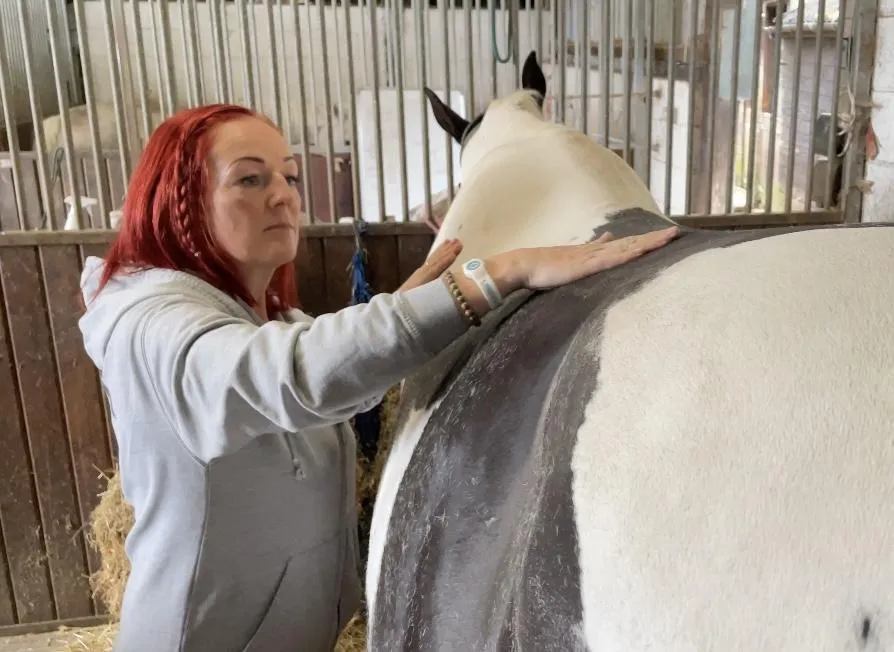
Massage, once a week (about 20 minutes)
If you have a bit more time for non-riding days, this is a lovely way to spend it.
It helps your horse, and it’s also a quiet way to bond with them. No tack, no pressure, no plan. Just you, your horse and a stable that’s warm and dry.
Start with long, light strokes to warm the muscles.
Then slower, firmer work on the spots that feel tight. The base of the neck, behind the shoulder and either side of the spine can be common places.
Take your time. Watch your horse. Licking, chewing, a lowered head and a soft eye can mean you’re in the right place, and you’ll often feel them relax under your hands.
Most horses have a side they find a little easier, the same way we’re left or right handed. So don’t be surprised if your horse relaxes into it more on one side than the other. That’s completely normal, and it’s all part of their natural crookedness pattern.
Next week, I’ll explain why that pattern happens in the first place.
A quick but important note
If you find real heat, swelling, or a horse that’s genuinely sore to touch, that’s a call to your vet, not a massage job.
Massage helps everyday tightness. It isn’t a substitute for getting something checked.
You’re the one who’s there every day
Your physio, saddle fitter and dentist are all part of your horse’s team. Book them, and use them.
But they see your horse for a few hours a year.
You see them every day.
And more schooling won’t fix it either. Schooling a body that’s stiff and one-sided mostly just practises the pattern.
What changes it is the small, regular work you do in between. Even on the days you can’t ride. The daily work is what compounds into bigger changes.
You can really help your horse this winter
Dark evenings don’t have to mean a lost winter.
Ten minutes like this, most days, does more than one big session at the weekend.
You’re keeping the muscles soft. Spotting problems early. And keeping your horse’s body ready for when the ground dries up.
Imagine coming out of winter with a horse who’s looser, more even and happier in their body than when they went in. And knowing you helped make that happen, even on the dark, wet nights when you didn’t feel like it.
And if you’re still riding at this time of year, you’ll feel the difference in their work.
Next week: why does your horse find one side easier than the other? I’ll show you where it actually starts. And it’s not where most people look. 🦄
👉 Stuck in this winter and not sure what to work on beyond the stable? Join my free live training, How to Build a Stronger, Straighter Horse, on Thursday 3 December at 7pm UK time. Save your free place HERE Can’t make it live? Sign up and I’ll send you the replay.
👉 Want to start learning exactly where to work, and how, today?
The Massage Course. A short, simple routine you can follow step by step: where your horse holds tension, which strokes to use, and how to read their response, so you can help them feel better on the days you can’t ride. £49 / $68.
👉 Massage Course: CLICK HERE
Pair it with the Core Exercises Course. Quick, effective, stable-based exercises to switch the deep core on once the muscles have softened. Just £9 / $12.
👉 Core Exercises Course: CLICK HERE
If you have any questions, need help deciding which course is right for you and your horse, or want to chat about 1-2-1 support, you can get in touch via the Contact page. I’d love to hear from you. 💛