Why Your Horse's Topline Isn't Enough — The Hidden Muscle That Actually Protects Their Spine
There's a muscle in your horse's back that most owners have never heard of.
It doesn't get talked about in ridden lessons.
It's not something you can easily see developing in the mirror.
And yet — according to peer-reviewed research — it might be the single most important muscle for your horse's long-term soundness, comfort and way of going.
It's called the multifidus.
And here's why it matters so much. 🦄
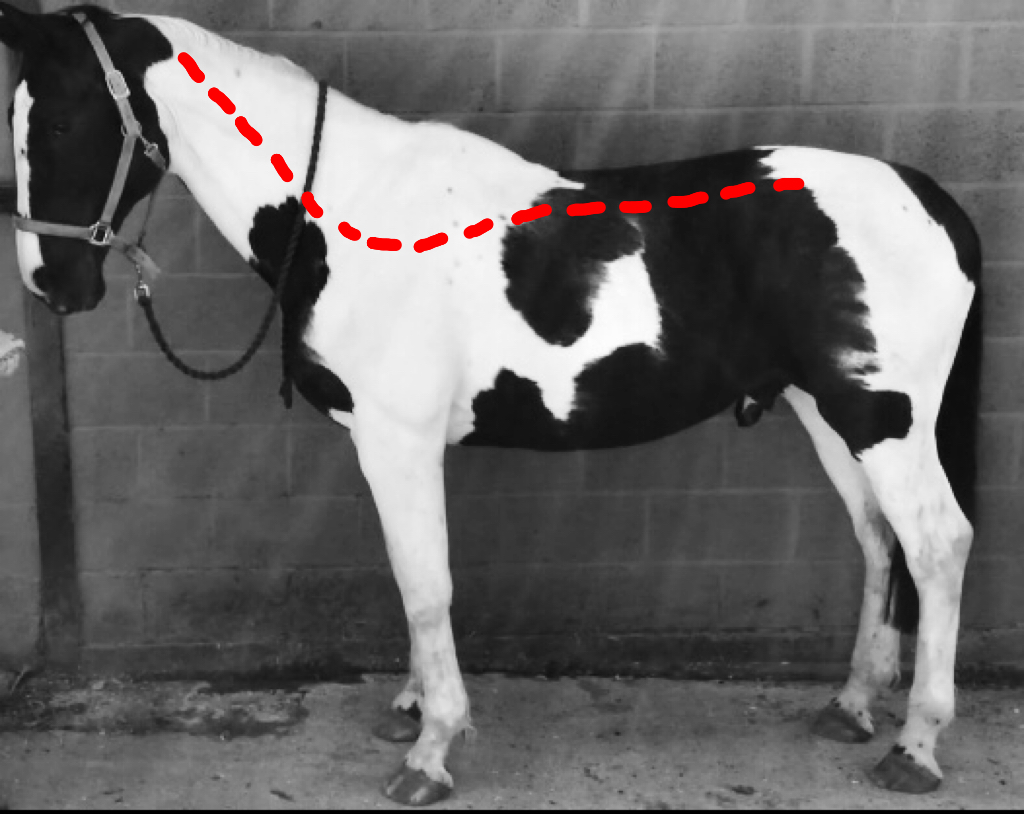
The multifidus is a chain of small, deep postural muscles that run along either side of your horse's spine — from the neck all the way through to the hindquarters.
Unlike the large, visible muscles you can see developing on the topline, the multifidus sits deep underneath. You can't easily see it. You can't feel it from the outside.
But what it does is extraordinary.
Each section of the multifidus connects one vertebra to the next — creating a continuous chain of stability along the entire length of the spine.
Think of it as the internal scaffolding that holds everything in place. ✨
And here's something really important.
When the multifidus is strong and working correctly, it creates space between the vertebrae — keeping the dorsal spinous processes separated and protected.
When it atrophies and weakens, that space reduces.
And that's when bones can start to come closer together.
The condition we know as kissing spine is directly linked to weakness and atrophy of the multifidus. Building these muscles isn't just about performance — it's about protection. 💚
When it's strong and working correctly, it stabilises the spine with every stride, absorbs the load of a rider, allows correct, supple movement, and protects the vertebrae from the cumulative impact of daily work.
When it's weak or switched off?
That scaffolding isn't there.
And the spine has to cope without it.
Here's what the research tells us.
Studies using ultrasound have consistently shown that horses with back pain and horses with limb lameness both show atrophy — wasting — of the multifidus muscles.
In a Colorado State University study, 36 horses were split into three groups — sound, forelimb lame, and hindlimb lame. Ultrasound measurements of multifidus size were taken across multiple spinal levels.
The result? Sound horses had significantly larger multifidus muscles than lame horses — regardless of which limb was lame. 🐎
I've seen this in clinical practice too.
Horses coming back into work after a period of box rest — where no specific core work was done during their downtime — sometimes present with new back pain or even a kissing spine diagnosis that wasn't there before.
The rest itself wasn't the problem.
The absence of targeted exercise to maintain the multifidus during that rest period was.
It's a stark reminder that these muscles don't maintain themselves. They need to be worked — specifically and consistently — to stay strong. 💚
This tells us something really important.
The multifidus isn't just about the back in isolation.
It's central to how the whole horse functions. When it's compromised, the effects ripple outwards — into movement, into soundness, into how comfortable and correct your horse feels every day.
Now here's the part that most horse owners don't know.
The multifidus doesn't build itself through normal work.
Regular ridden exercise — hacking, schooling, jumping — doesn't specifically target these deep postural muscles in the way they need to be targeted.
Which means most horses in regular work still have underdeveloped multifidus muscles.
Not because their owners aren't doing enough.
But because the right exercises aren't being done. ✨
So what does build the multifidus?
This is where the science gets really exciting.
Research published in the Equine Veterinary Journal — one of the most respected peer-reviewed journals in equine medicine — proved that specific dynamic mobilisation exercises increase the cross-sectional size of the multifidus muscles over time.
These are the exercises most people know as 'carrot stretches' or 'baited stretches'.
In the original study by Dr Hilary Clayton and Stubbs, horses performed only these exercises — no ridden work, just the exercises — for three months. Ultrasound measurements were taken throughout.
Every single horse showed an increase in multifidus muscle size at all six spinal levels measured.✨
And the findings have since been replicated in multiple subsequent studies — in therapy horses and in racehorses in full training. The research is consistent and clear.
These exercises work. Regardless of your horse's current workload, age or discipline.
What does this mean in practice?
It means that a few minutes of targeted stable-based exercises — done consistently, as part of your horse's routine — can literally build the muscles that protect their spine.
Not just make them feel a bit looser.
Actually increase the size of the deep postural muscles that stabilise every vertebra in their back.
That's not marketing. That's peer-reviewed science. 💪
And this matters for every horse.
Not just horses with back pain.
Not just horses in rehabilitation.
Every horse that carries a rider is having load placed through their spine — and every horse benefits from having the multifidus strong, engaged and working.
The horse that feels a bit flat.
The horse that's stiff on one rein.
The horse that's always been a little crooked.
The horse whose topline just won't fill out no matter how much work goes in.
In many cases, the multifidus is part of the answer.
This is exactly why core activation exercises are at the heart of everything I teach.
My Core Exercises Course gives you the exact stable-based routine I use and teach - including the exercises from the study that the research shows builds the multifidus over time - in addition to extra core mobilisation and activation exercises for a full daily routine.
Step by step. Video demonstrations. No special equipment. 5-15 minutes before you tack up.
The science is clear. The method is simple. And the results speak for themselves.
Just £9 / $12 — lifetime access.
👉 Core Exercises Course: CLICK HERE
And if you want to take this further — building the multifidus is the foundation, and in-hand work is the next step that takes everything you build in the stable out into movement.
In-Hand Exercises Course — currently half price at £49.50 / $68 with lifetime access.
👉 In Hand Exercises Course: CLICK HERE
And as always, if you have any questions, need help deciding which course is right for you and your horse, or want to chat about 1-2-1 support — you can get in touch via the Contact page. I'd love to hear from you. 💛