My Horse Has Kissing Spine — What Do I Do Now?
If you've just been given a kissing spine diagnosis for your horse, I want you to take a breath.
Because I know exactly how you're feeling right now.
And I want you to know — there is a clear path forward. 🦄
Let me take you back about eight years.
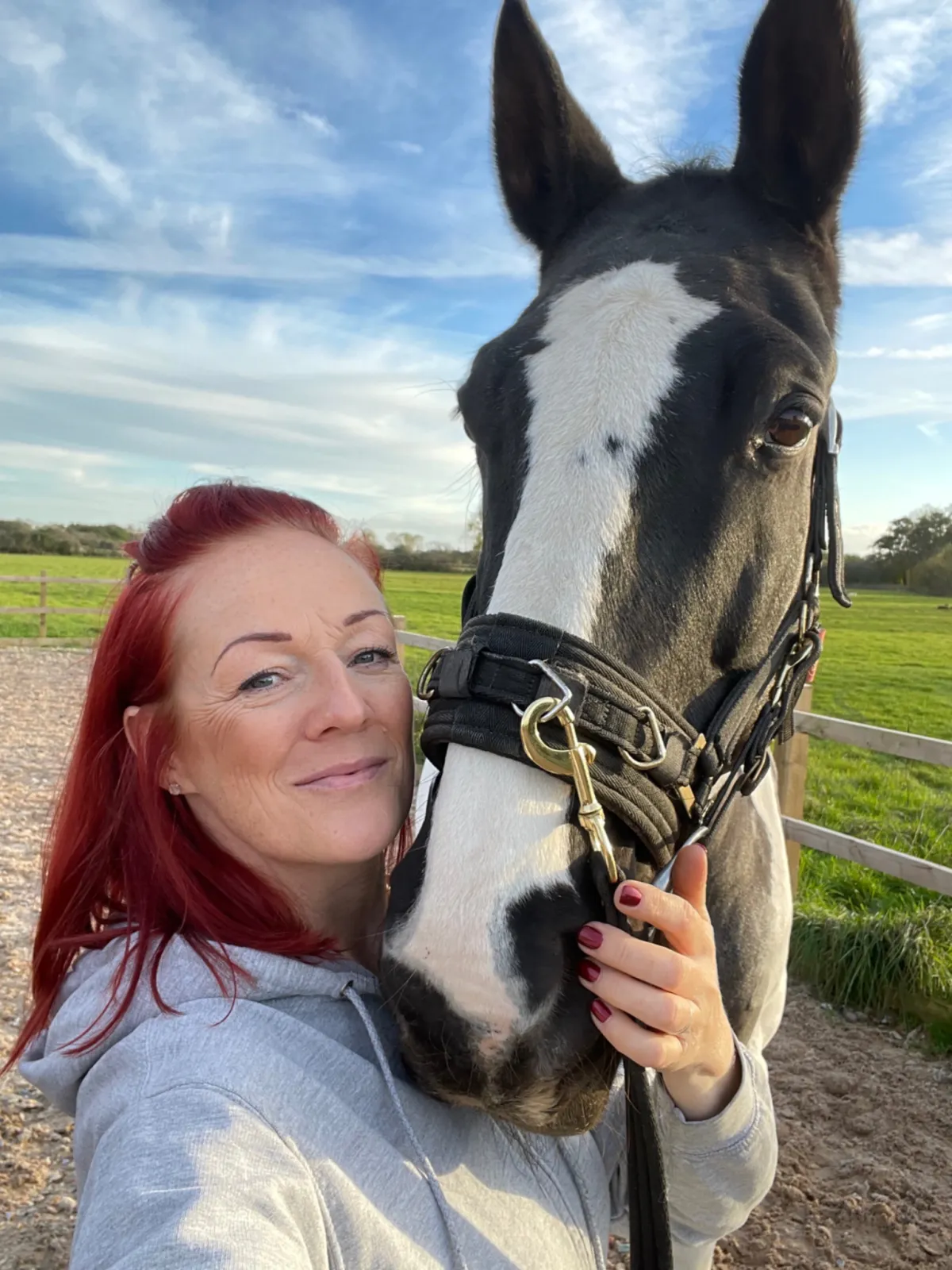
Azuro wasn't bucking. He wasn't rearing. He wasn't doing anything that would make a stranger watching from the gate say "that horse has a problem."
He just felt... difficult.
Stiff on one rein. Hard to get working well in schooling sessions. Not quite right in a way I couldn't fully put my finger on.
I'd had his hocks medicated a few times — it helped a bit. I started exploring different avenues. Groundwork. Rehab-style work. I was constantly looking for ways to improve him, to unlock something that felt like it was just out of reach.
And then I started to wonder about kissing spine.
Here's the thing about being an equine physiotherapist who suspects her own horse might have KS.
It turns out it's actually very difficult to assess your own horse objectively.
But the more I looked, the more I couldn't ignore it.
At the time — eight years ago — the understanding of kissing spine was different to what it is now. The "traditional" symptoms weren't all there. And yet something in my gut kept coming back to the same answer.
When the diagnosis was confirmed, I wasn't totally shocked.
But I was devastated. 💚
Devastated for him — that he'd been carrying this, trying his best, compensating in ways I hadn't fully seen. Embarrassed, honestly, as a professional. And overwhelmed about what on earth to do next.
Relief came too — eventually. At least now I had an answer. At least now I knew what I was actually dealing with.
All of those emotions at once. If that sounds familiar, you're not alone.
Then came the surgery decision.
And this was genuinely one of the hardest decisions I've ever made with a horse.
There were real arguments on both sides.
Surgery carries risks. Recovery is long. There are no guarantees. And not every KS horse needs to go that route.
But there were also compelling reasons to go ahead — and my specialist vet was able to give me the information I needed to make the most informed decision possible.
Here's something that genuinely moved me though.
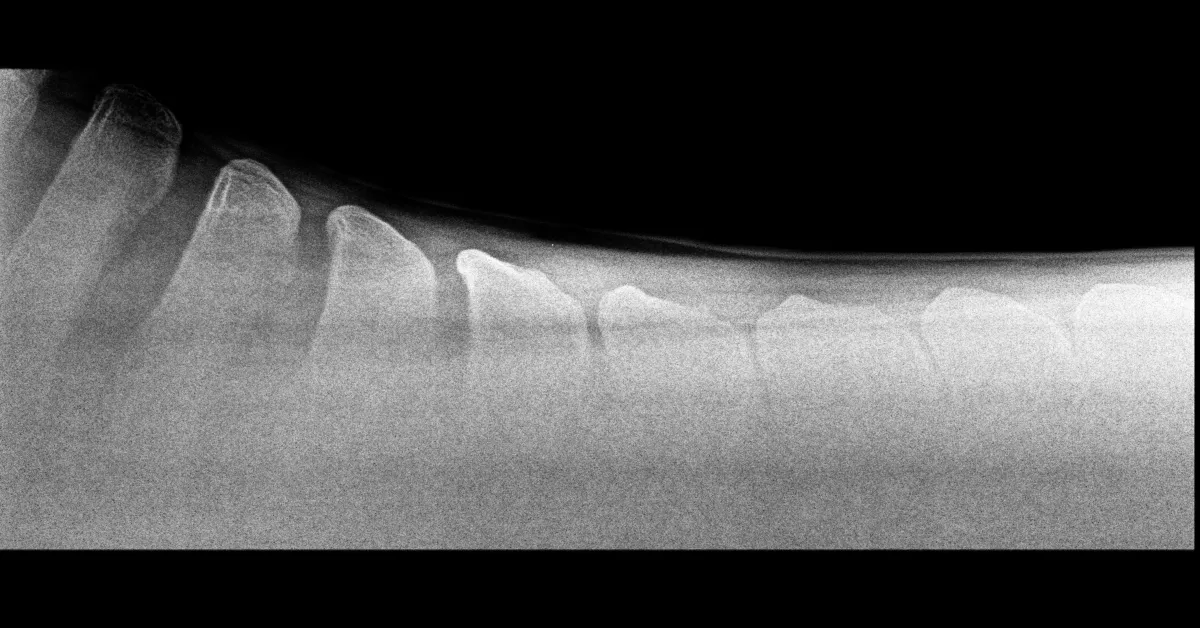
When my specialist vet assessed him, she confirmed that two of the bones that had been touching were no longer touching.
The rehab-style work I'd already been doing with Azuro — before we even had a diagnosis — had started to make a difference. His body had already begun to respond.
That told me something I've never forgotten.
The right work, done consistently, changes things. Even when you don't yet know exactly what you're dealing with. ✨
We went ahead with surgery — a procedure to release the tight ligaments between the affected vertebrae, giving the spine more freedom of movement.
And then the real work began.
At two weeks post-surgery, as soon as his staples were out, I started the core exercises.
Not because I was impatient. Because the research and my clinical experience both told me that the sooner we could begin building correct muscular support around that spine, the better his recovery would be.
I learned an enormous amount through that process. About how the body responds. About how quickly things can change when you give a horse the right foundation. About what Azuro was capable of when the pain was gone and the support was there. 🐎
He got moving well on the lunge. He looked and moved tremendously.
And then I noticed something.
He was still crooked.
My head nearly fell off — in the best possible way — because that's when I understood what the surgery had actually given us. The ligament release meant he could now move in ways he'd been bracing against for years. And the groundwork, the in-hand exercises, could now do their job properly.
That was the turning point.
In January 2023, I was asked to contribute to a Horse & Hound article on the discovery of a gene linked to kissing spine. My point — which they published — was this:
Every horse has the potential to develop KS because of how their spine is structured. The dorsal spinous processes are naturally closest together in the middle of the back. Right where we sit.
Which means whether your horse is genetically predisposed or not, strengthening their core to support their back isn't optional. It's just good horsemanship.
Get the fundamentals right, and you can make a real difference — whatever the genetics say. ✨
So if your horse has just been diagnosed with kissing spine — here's what I want you to know.
One — don't panic. There is a clear path forward.
KS is not the end of your horse's story. With the right approach, the right support, and the right exercises, horses recover. They get stronger. They get more comfortable. They surprise you.
Azuro is 21 years old. He is stronger, straighter and more comfortable than he has ever been.
That's not luck. That's the work. 🦄
Two — get a proper diagnosis before assuming anything.
If you suspect KS, work with a specialist vet who can assess your horse properly. Understanding exactly what you're dealing with — how many vertebrae are affected, whether surgery is appropriate, what the options are — is the foundation of making good decisions.
Three — start core exercises as soon as it's safe to do so.
This is non-negotiable for a KS horse at any stage — before diagnosis, post-surgery, in ongoing maintenance. The deep postural muscles that support the spine are everything. Building them correctly, consistently, and safely is what makes the difference between a horse that recovers and one that relapses.
The right core exercises do two incredibly important things for a KS horse — they gently create space between the affected vertebrae, and they build the deep postural muscles alongside the spine that provide the support and stability your horse's back needs for the long term.
These are the exact exercises I started with Azuro at two weeks post-surgery — and we still do them today, eight years later.
They're not just something I recommend as a physio. Core exercises for KS horses are widely recommended by specialist vets and equine physiotherapists as a cornerstone of recovery and long-term management. They're not optional. They're fundamental.
My Core Exercises Course gives you a gentle, step-by-step guide to doing them correctly with your own horse — at any stage of the KS journey.
Just £9 / $12 — lifetime access.
👉 Click Here for Core Exercises Course details
If you want a clear, expert-led starting point for understanding and navigating KS recovery — my Kissing Spine Rehabilitation & Prevention Strategies Ebook brings everything together in one place.
It covers the diagnosis, the essential first steps, the exercises, the training aids to use and avoid, and how to plan for the long term. A solid foundation to begin your horse's recovery with confidence.
Just £14.99 / $20 — lifetime access (PDF).
👉 Click Here for Kissing Spine Ebook
And if you're navigating this and want personal, tailored support — I offer 1-2-1 rehabilitation consultations for exactly this situation.
👉 Get in touch via the contact page here: Contact Jenny
Or just hit reply to any of my emails and let's talk about what's right for you and your horse. 💛