Why Flexible Horses Move Better
Why Flexible Horses Move Better...And Why It Matters More Than You Think 🐴
You can have a horse that looks “fit”…but still feels stiff, heavy, or uneven to ride.
And if you’ve ever had that feeling, like something just isn’t quite right, you’re not imagining it.
More often than not, the missing piece isn’t more work.
It’s flexibility.
Because without it, your horse physically can’t move as well as they’re capable of - no matter how hard they try.
The Common Misunderstanding
When riders want to improve their horse’s movement, they often focus on:
building muscle
doing more schooling
increasing fitness
riding more
And that makes sense - it’s what most of us have been taught.
But here’s the part that often gets missed:
A stiff body can’t use muscle properly.
If the spine isn’t able to move and adapt, your horse can’t:
lift through their back
step under effectively
stay balanced
move straight
So instead, they do the best they can with what they have.
You might notice:
heaviness in the hand
tension in transitions
resistance in certain movements
a feeling of crookedness or unevenness
And it can feel frustrating… because you’re trying, and they’re trying too.
Why Flexibility Comes First
For a horse to move well, the body needs to be able to bend evenly through the ribcage, lift the spine, and absorb movement.
When flexibility improves:
✅ the back can lift more easily
✅ the hindquarters can engage properly
✅ the shoulders move more freely
✅ balance becomes easier to find
And this is often the moment riders say:
✨ “They suddenly feel so much better.”
What Happens Without It
When flexibility is limited, horses often:
brace through the topline
drop through the midsection
carry too much weight on the forehand
develop tension instead of strength
And this is where I see so many horses get stuck.
Because it looks like they just need:
“more work”
“more engagement”
“more forward”
But in reality…
👉 their body isn’t ready for that yet.
And that’s not a training failure, it’s just a missing step.
The Missing Link: Core Strength + Flexibility
Flexibility isn’t just about stretching or bending.
It’s closely linked to core strength.
Because for a horse to move through their body comfortably, they need:
stability through the core
support for the spine
the ability to lift and carry themselves
This is why simply asking for bend, or riding more, doesn’t always change things.
True, lasting flexibility comes from:
➡️ a body that is both mobile AND supported
How to Start Improving Flexibility (The Right Way)
This is where things can start to feel much clearer - and much more doable.
1. Start with Core Activation
Before anything else, the deep muscles need to switch on.
Simple, stable-based exercises (your horse’s version of “core work”) help:
support the spine
reduce bracing
allow movement to happen more freely
This is often where I see the biggest and quickest changes.
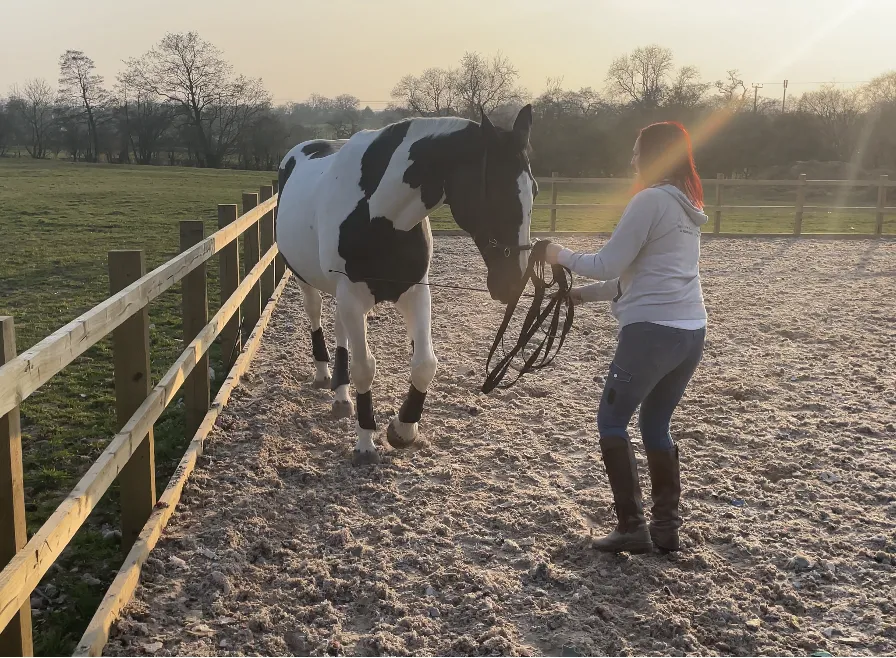
2. Use In-Hand Work to Develop Movement
Once the core is starting to engage, in-hand work becomes incredibly valuable.
It allows you to:
guide correct bend
improve symmetry
introduce movement without the weight of a rider
help your horse understand how to use their body
This is where flexibility becomes something they can actually use, not just something we ask for.
3. Then Build Into Ridden Work
When your horse can:
lift
bend
stabilise
…ridden work starts to feel very different.
This is where you’ll often notice:
smoother transitions
more even contact
improved straightness
a horse that feels lighter and more comfortable
And this is the point where your work really starts to pay off.
The Payoff
When flexibility and strength develop together, horses:
move more freely
carry themselves better
feel more comfortable in their work
build a stronger, more correct topline
And as a rider, it feels easier too.
Less effort.
Less resistance.
More ease and flow.
Next Steps: Where to Start
If you’re recognising some of this in your own horse — you’re not alone.
And the good news is, this is something you can improve with the right approach.
These are the exact steps I use and teach:
Core Exercises for Your Horse
Start here to activate the deep muscles that support the spine and allow movement to improve. Click HERE for details
In-Hand Exercises Course
Build correct movement, symmetry, and functional flexibility from the ground, by teaching your horse lateral movements in a step-by-step format. Click HERE for the details
Strength & Straightness Training Programme
A complete, structured approach that brings everything together — from foundation work through to ridden strength and straightness. Click HERE for the details
🌟 You don’t need to do more.
You just need to start in the right place.
Once you understand how flexibility really affects your horse’s movement…
👉 everything starts to make sense.
And from there — you can begin to build a horse that feels stronger, more comfortable, and genuinely better to ride. 💛