Your Horse Wasn’t Designed for Riding
This might sound like a strange thing for an equine physio to say, but it’s one of the most important things I can tell you about your horse.
Your horse’s body wasn’t designed to be ridden. 🦄
Where your horse comes from
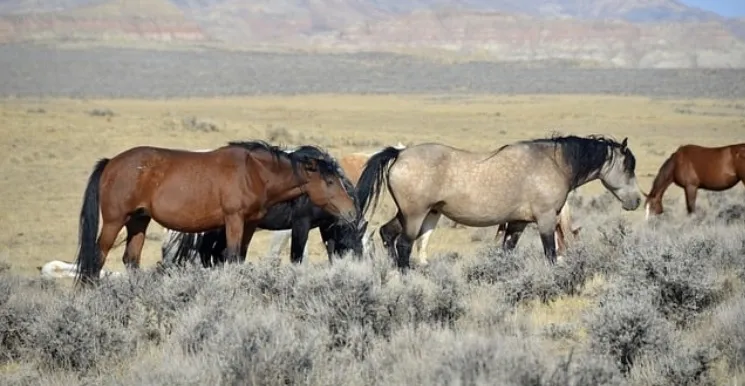
In the wild, a horse spends almost all of its day on the move. They walk around 20 miles a day, grazing slowly mainly with their head down, as part of a herd. Their body is built for exactly that: long, slow, steady movement, with roughly 60% of their weight carried on the front legs, and nothing at all on their back.
Domestication is the opposite. Our horses often spend long hours standing still, stabled or in a small paddock, with far less movement than their bodies expect. And then we get on.
What happens when we get on
Think of your horse’s spine as a bit like a suspension bridge, strung between the front legs and the hind legs. They also have no collarbone, so the whole front end is held up by muscle.
Now put a rider in the middle of that bridge. Unless something lifts it, the back drops, the weight tips further onto the forehand, and the hind legs push from behind instead of stepping under.
That isn’t your horse being lazy or naughty. It’s what any body does when it’s asked to carry weight it hasn’t been prepared for. Think of putting a heavy rucksack on someone who has never trained for it. They’d cope for a while, but their posture would change, and sooner or later they’d start to ache.
So what holds them up?
The good news is that horses can carry us beautifully. But it doesn’t happen by itself. It takes:
A strong deep core to lift and stabilise the back from underneath. These are the deep muscles along and under the spine, and they hold it steady and lift the back up into the rider’s weight, instead of letting it sag.
The muscles around the front end to lift the shoulders and chest. With no collarbone, these muscles hold the whole front end up between the shoulders. When they’re weak, the chest drops, the weight tips onto the forehand, and your horse feels heavy in your hand.
Hind legs that step under and take more of the weight. When the hind legs come under the body, they lighten the front and let the back come up. Stiff, pushing hind legs do the opposite.
Both sides working evenly, so they’re not carrying you crookedly. If one side is stronger or tighter, your horse takes more weight on that side, and you feel it as a stiff rein, falling in or out, or one side that always feels heavier.
None of that comes from riding alone. It has to be built, on purpose, and ideally before the saddle even goes on.
What I see in the horses I work with
Some of the horses I’ve worked with have been with me for years, and they’ve taught me more than anything.
With proper, long-term strengthening, I see a horse’s body and movement change. The topline fills out, they stand squarer, and they carry themselves in a way that looks almost effortless. They feel different to ride too: lighter, more even, and easier to sit to.
When they lose that condition, through a winter off, an injury or a busy few months, I see it go the other way. The topline softens, the back drops, they get heavier on the forehand, and the crookedness that had gone starts to creep back.
And then there’s the one I see most often: being behind the curve. The strength has gone, but we keep riding and schooling to chase it back, while the body is already compensating. In my experience, that’s a losing game, because every ride practises the weakness and negative patterns in the body. Stepping back to build the strength first is usually quicker in the end.
Why winter makes it harder
Less work and less turnout mean the muscles that hold your horse up are doing less. So when you do ride, often cold and in the dark, you’re asking a body that’s less prepared to carry you.
That’s exactly why the ground and stable work matters so much right now. It keeps you ahead of the curve, instead of chasing it in spring.
Where to start
1. Switch on the core, in the stable. Five to fifteen minutes before you ride, or on the days you can’t.
2. Build carrying power from the ground. In-hand work has no rider weight on your horses back, so you can teach them to step under and work both sides evenly.
3. Then ride, and feel the difference. A horse who can hold themselves up feels lighter, softer and more even underneath you.
This is the taster. How to build all of this together, strength and straightness, in a way that sticks is what I’m covering in full in the live below.
🌟Join me live on Thursday 3rd December
I’m running a free live training on Zoom, How to Build a Stronger, Straighter Horse, and I’d love you to be there.
Thursday 3rd December, 7pm UK time.
I’ll be explaining:
Why crookedness patterns hold on so tightly
How to build strength and straightness together, rather than one without the other
What a realistic winter plan looks like, so you can start changing your horse’s pattern
It’s especially for you if your horse is stiffer on one rein, struggling with their topline or back, heavy on the forehand, or a senior horse or in rehab.
Can’t make it live? Register anyway, and you’ll get the replay.
👉 Save your free spot here: CLICK HERE
Want to start now?
The Core Exercises Course. Quick stable-based exercises that switch on the deep core muscles that lift your horse’s back. Just £9 / $12.
👉 Core Exercises Course: CLICK HERE
The In-Hand Exercises Course. Carrying power from the ground: standing square, equal bend, backing up straight, and building up to shoulder-in and other lateral exercises. Half price at £49.50 / $68.
👉 In-Hand Exercises Course: CLICK HERE
And if you have any questions, need help deciding which course is right for you and your horse, or want to chat about 1-2-1 support, you can get in touch via the Contact page. I’d love to hear from you. 💛